
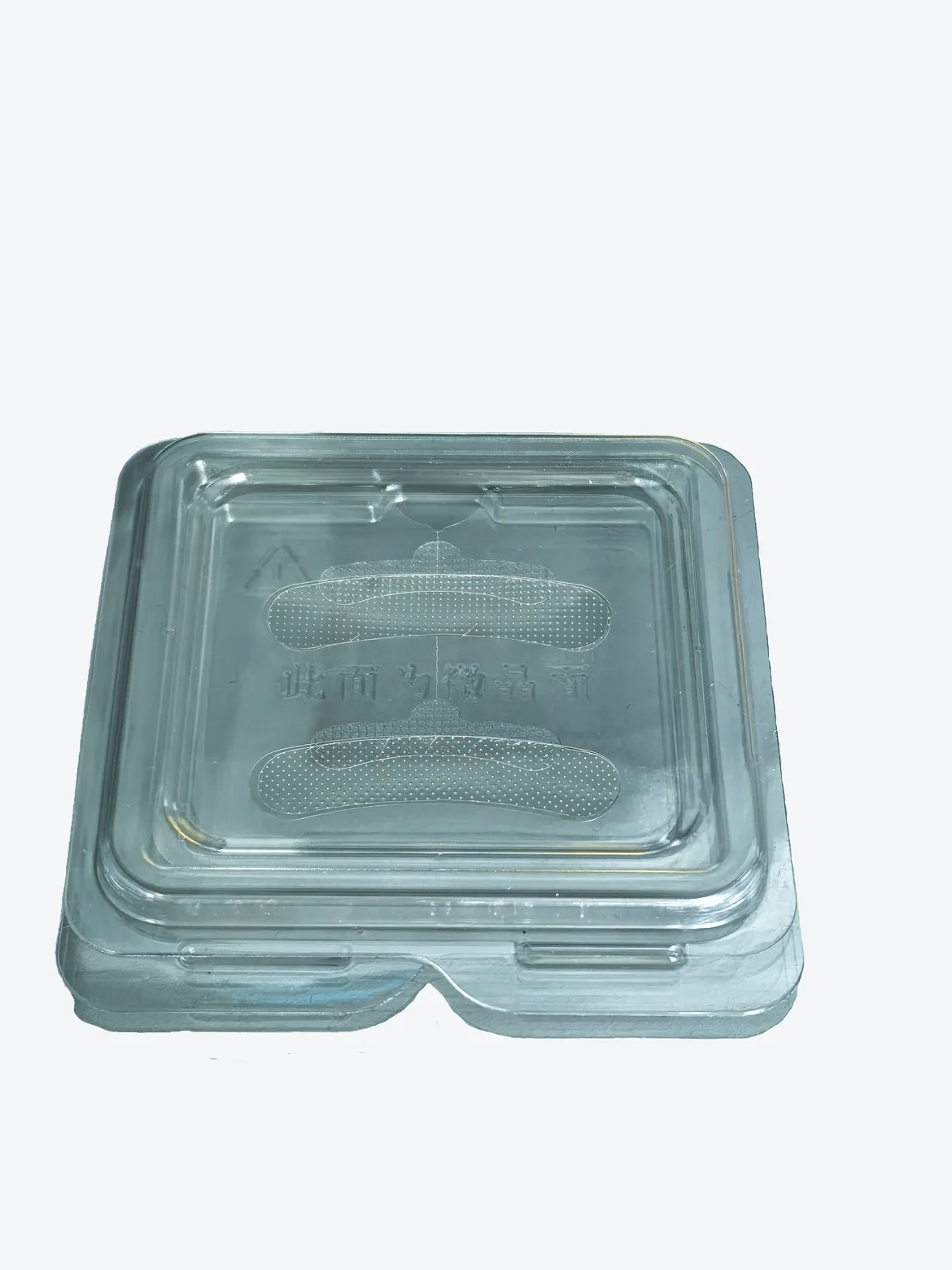
Protection has mechanical and environmental parts
A tray can support the patch and prevent contact with delicate regions, while a sealed primary package can influence exposure to the surrounding environment. These functions should be evaluated separately and then together. A rigid tray does not establish barrier performance, and a high-barrier film does not prevent contact damage if the patch moves inside the pack. The package definition should identify support points, protected clearance, seal arrangement and the components that contact the product. A cross-section drawing can make these relationships understandable to buyers. The drawing should represent the intended configuration and should not substitute for evidence from actual assembled packs when package performance is being claimed.
Compare opening and retention together
The package must retain the product during handling while allowing it to be removed without unintended bending or contact. Those requirements can compete. A very close-fitting cavity may limit movement but make lifting difficult. A generous opening may simplify removal while allowing more rotation during transit. An illustrative comparison should therefore assess both retention and access using representative patches rather than empty trays. The evaluation can record the location of contact, orientation changes and the sequence used to remove each piece. These observations are specific to the sample and assessment. They should guide design choices without becoming unsupported claims that a particular tray prevents all damage or guarantees the same experience across every contour.
Keep package changes within the configuration record
Changing pouch dimensions, film structure, seal geometry or tray material can affect the relationship between protection and handling. A package revision should therefore identify what changed and which evidence remains applicable. If two patches share one protective compartment, opening exposes both; if they are separated, the count and opening sequence differ. Those details belong on the product page and in the packing definition. A buyer should be able to distinguish one pair from one pouch and from one carton. Final storage and shelf-life statements require evidence for the assembled system. They should not be inferred from a component brochure, a competitor's pack or the stability of the unassembled matrix.