
What to evaluate
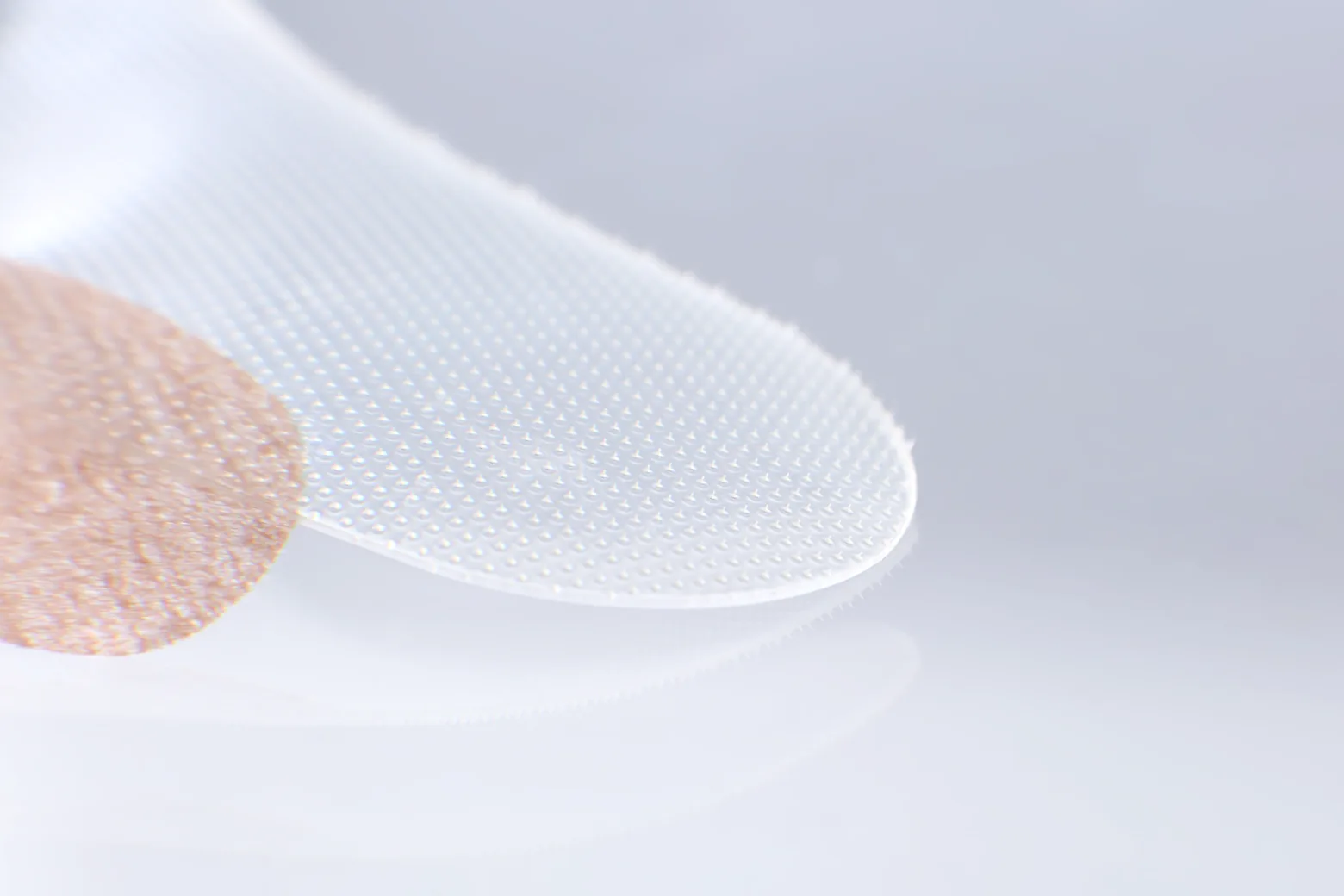
The backing and release liner affect how an eye patch is removed, oriented and positioned. A buying specification should describe the handling edge, liner opening direction and contact between the protective system and needle face. Request photographs of both sides and an opening sequence, as a front-view image conceals important details.
Planning the next decision
Compare samples using the same observation sheet. Record accidental bending during removal, liner residue, orientation confusion and damage after opening. These are design observations that can guide revision; they are not clinical outcomes. Keep the adhesive identity and intended contact area within the approved material file. If a backing supplier or liner coating changes, review whether the established handling and package observations still apply. A small component substitution can justify a fresh sample assessment.
Follow the load path through the assembled patch
The backing transfers handling forces across the patch, while the release liner protects the attachment surface before use. A stiff backing may distribute force differently from a flexible one, and a liner that releases unevenly may bend the patch during opening. These interactions matter even when the array itself is unchanged. A component drawing should identify the adhesive region, any non-adhesive handling border and the direction of liner removal. Materials should be identified by a controlled specification, not only by colour or supplier nickname. A project can then compare assembled samples under the same handling assessment and determine whether a reported difference comes from the array, the backing or the release behaviour.
Design the opening sequence before printing instructions
If a liner is difficult to distinguish from a protective cover, the problem is partly informational and partly physical. A larger tab, a split liner or an asymmetric tray may make the sequence easier to understand, but each change needs to be checked against the patch geometry. For example, moving a tab can change the direction of bending during removal. An opening review can observe whether users touch the functional surface, separate the wrong layer or place the discarded liner back on the patch. Such observations concern usability of the package and should not be presented as a clinical study. The resulting instructions should illustrate the actual approved construction, including which pieces are discarded and which remain part of the patch.